Author: coveysb admin

Labour woes in furniture industry to be resolved soon
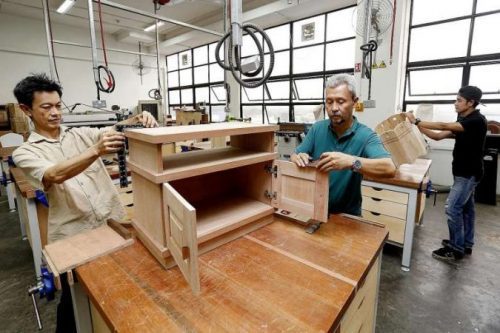
PUTRAJAYA: There will be a “practical solution” to overcome the shortage of workers in the furniture-making industry.

Giving the assurance was Minister in the Prime Minister’s Department Datuk Seri Dr Wee Ka Siong, who said he had raised the matter with Deputy Prime Minister Datuk Seri Dr Ahmad Zahid Hamidi.

He expected some positive news soon, adding that representatives of the Muar Furniture Association and eight other organisations had met him to air their concerns about the labour shortage.

“They are appealing to the Government to ensure that the supply of fresh Bangladeshi workers is not disrupted.

“Hopefully, this will be resolved soon so that our exports are not affected.

“The DPM will study the matter and come up with a proposal on how to resolve it for the long-term,” the minister said at his office yesterday.

Dr Wee said it was more practical to recruit workers from Bangladesh due to “suitability and availability.”

“Other countries like Nepal cannot meet the industry demands.

“In the furniture-making industry, you cannot use 30 people to do a job meant for 100. Based on feedback, Bangladeshi workers are doing a good job,” he added.

Dr Wee also said industry players had spoken about the shortage of rubberwood, which is affecting production.

“They have petitioned the Government. Malaysia is one of the top 10 exporters of furniture, but if these shortages are not addressed, other countries like Vietnam can overtake us,” he added.
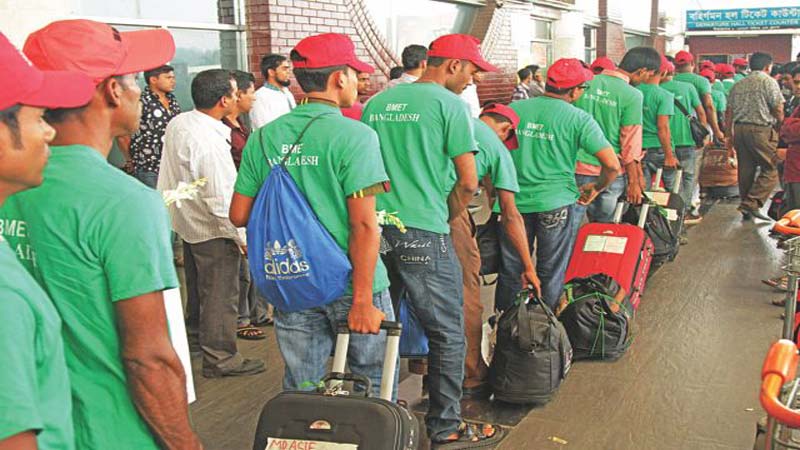
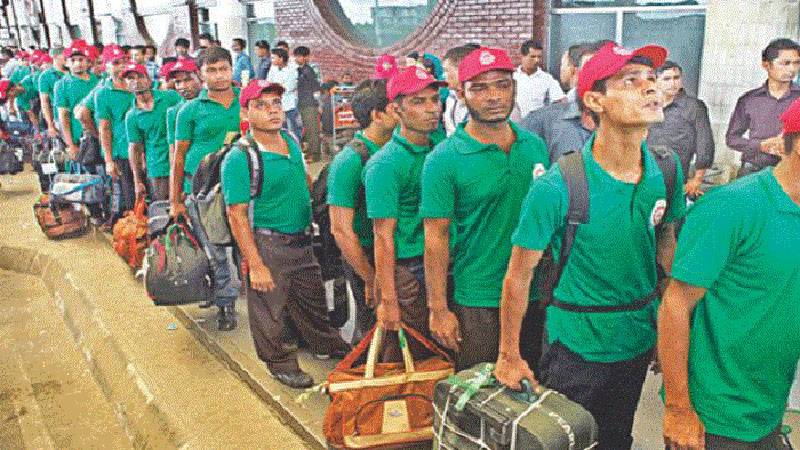
Second batch of workers leaves for Kuala Lumpur G2G plus agreement

The second batch of Bangladeshi workers comprising 128 left Dhaka for Kuala Lumpur, Malaysia, last night by two flights under Government to Government (G2G) Plus agreement signed between the two countries.

With this, a total of 226 workers have so far gone to Malaysia in two batches under the G2G Plus agreement signed on February 18 last year.
Earlier on Friday, the first batch of 98 workers went to Malaysia through online system, first of its kind to avert malpractices.
Secretary general of Bangladesh Association of International Recruiting Agencies (BAIRA) Ruhul Amin Swapan said 70 more workers would be flown to Kuala Lumpur on March 20 in the third batch.
He expects around 700 workers would go to Kuala Lumpur by this month as the G2G Plus agreement opened the labour market in Malaysia, the second biggest manpower market for Bangladesh after about eight years.
The BAIRA leader said the G2G Plus agreement opened a new horizon in the manpower business and give a fillip to the economy of the country.
A worker is going to Malaysia with a three-year valid visa and he would be able to renew visa for two more years. A worker would be able to extend his work permit for another five year if the employer retains his services, according to BAIRA sources.
According to agreement each worker under the G2G Plus scheme would get at least 1,000 RM (equivalent to around Tk. 18,000) as salary per month for eight hours of daily work. Besides, a worker would be allowed to work overtime, if feasible.
In addition, a worker will have insurance coverage and receive free accommodation facilities from the employers, the sources added.
Asked about the reason and criterion to select only 10 recruiting agencies to send workers in Malaysia, a BAIRA official preferring anonymity said the process has been
initiated with those who have better track records. “Malaysian government assured us that the number of recruiting agencies will increase when the recruitment will be increasing,” he said.
Sources in the ministry also said though 10 recruiting agencies are involved in sending workers to Kuala Lumpur on a pilot basis, 300 to 350 agencies would gradually join the process.
The government has fixed Tk 37,000 for sending a worker. However, sources in the recruiting agency said they would send each worker for a reasonable amount of money, a sum that would be less than the migration cost of other countries.
Under the G2G Plus agreement, the Malaysian employers will recruit Bangladeshi workers in different sectors including construction, plantation, and manufacturing and service sectors.
In January last, Malaysian employers started issuing demand letters to the Bangladesh High Commission in Kuala Lumpur to hire Bangladeshi workers under the G2G Plus agreement.
The Malaysian government had stopped hiring Bangladeshi workers in 2009 after the influx of a large number of illegal workers between 2007 and 2008.
Sources in the ministry said a team of Malaysian employers has already arrived Dhaka to take interview of workers who will be going to Malaysia later on.

Bangladeshi workers likely to head for Malaysia in Feb

The first batch of Bangladeshi workers, under the Government-to-Government (G2G) Plus initiative, is likely to be sent to Malaysia either later this month or early next month, according to sources.
Officials of authorised recruiting agencies said they would start sending recruitment files to Malaysian employers from next week and hope to get calling visas from them against their demand letters.
They hoped that they would be able to send the first batch of workers to Malaysia later this month, or early next month, after completion of the whole process including bio-medical tests.
The additional secretary (admin) of the Ministry of Expatriate Welfare and Overseas Employment, Jabed Ahmed, told The Independent that the process to send the first batch of workers is on. “We expect the minister to formally set in motion the opening of the labour market to Malaysia under the G2G Plus agreement later this month after his arrival from Australia,” he added.
He also said the minister is expected to return home after the third week of this month.
Replying to a question, Jabed Ahmed said Bangladesh has so far received about 8,000 demand letters from Malaysian employers to recruit workers in construction, plantation, and manufacturing and service sectors.
Bangladesh Association of International Recruiting Agencies (BAIRA) president Benjir Ahmed said no exact date has been fixed to send the first batch of workers. After having recruitment approval from the government, the workers are now going through bio-medical tests.
The process to send them to Kuala Lumpur will start after getting calling visas from employers, he added.
Sheikh Abdullah, owner of Shanjari Travels and Tours, said he has got about 500 demand letters and is now completing bio-medical tests of the workers. “I think we will be able to send recruitment files to Malaysian employers from next week,” he added.
He also said the flight schedule of workers will be drawn up after calling visas from the employers are received.
Sources said the Ministry of Expatriate Welfare and Overseas Employment has received about 8,000 demand letters and has given approval for recruitment of about 5,500 workers.
A total of 10 recruiting agencies approved by the Malaysian government are carrying out the process to send workers under the G2G Plus scheme on a pilot basis. The Malaysian labour market had been closed for Bangladeshi workers for about eight years.
The Malaysian authorities selected the 10 agencies from a list of 957 the government sent to Kuala Lumpur in two phases, said the sources.
The approved recruiting agencies are: Amin Tours and Travels, Unique Eastern Private Ltd, Career Overseas Resources, ISMT Human Resources, Shanjari Travels and Tours, Rabbi International, Catharsis International Recruiting Agency, Passage Associates, Al Islam Overseas and Prantik Tourism.
In the middle of January, Malaysian employers started issuing demand letters to the Bangladesh high commission in Kuala Lumpur to hire Bangladeshi workers under the G2G Plus agreement.
The Malaysian government had stopped hiring Bangladeshi workers in 2009 after experiencing the entry of a large number of illegal workers between 2007 and 2008.
On February 18 last year, the two countries signed the G2G Plus deal, involving the recruiting agencies for selecting and sending workers to Malaysia in five sectors to avoid malpractices.

New E-kad to enable legalisation of foreign workers, says Immigration Dept – Nation

SHAH ALAM: Illegal foreign workers with valid employers can come forward to register and legalise their employment under the Immigration Department’s E-kad (enforcement card) programme.

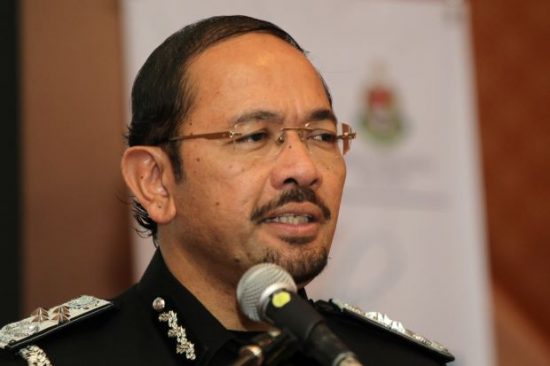
Immigration Department director-general Datuk Seri Mustafar Ali (pic) said the government made the decision to legalise the employment of foreign workers following high demands from several sectors.

“The registration will be available from Feb 15 at all of our offices in the peninsula and state Immigration departments,” he told a press conference after visiting its Shah Alam headquarters at Kompleks PKNS Shah Alam, on Tuesday.

Registration for the E-kad will be free and it will be valid for a period of one year.

Only five sectors have been approved for the programme, namely, the plantation, agriculture, industrial, construction and services, said Mustafar.

He added that employers can apply for the E-kad between the period of Feb 15 until June 30.

“There will be no extension beyond June 30 and we are firm on this.

“During the one-year period, employers are adviced to apply for their worker’s passport and permits from their respective embassies,” he said.

He also warned employers not to apply to register their foreign workers through any middlemen or agents.

“The employers have to register their foreign workers with the necessary documentations and it will take two days to process,” he said.

He estimated that between 400,000 to 600,000 foreign workers will turn up to register under the programme.

E-Kad’s terms and conditions:

In summary, illegal workers can come forward with their employers to register and legalise their employment under the Immigration Department’s E-kad (enforcement card) programme starting 15 Feb – 30 June, 2017.

Among the terms and conditions are:

  1.  Must have a valid employer falls under approved 5 sectors (construction, plantation, services, manufacturing and agriculture)
  2. Comply with the REHIRING conditions.
  3. Illegals from Source Countries and Approved Sectors only.
  4. “Suspect” status on Blacklist Immigration (BLI) allowed.
  5. Reported RUNAWAY disqualified.
  6. Unfit medical disqualified.
  7. Applied to Peninsular Malaysia only.
  8. Card is free and process takes 2 days.
  9. Middlemen and Agents not allowed.
  10. Only for 1 year extension.
  11. Those who has registered under Program Rehiring is not allowed to change Employer.
  12. Employers must not listed under “Blacklisted” by OSC, KDN and Immigration.

Employers can now apply for E-Card to address labour shortages (Updated)

SHAH ALAM: Employers of illegal foreign workers in Malaysia will now be allowed to apply for a temporary Enforcement Card (E-Card) to address labour shortages in the country, the Immigration Department announced today.

“The government made this decision to register all employers who hire foreign workers to address labour shortages in several key economic sectors,” said Immigration Malaysia director-general Datuk Seri Mustafar Ali.

The card will give these workers a one-year extension in the country and will act as a temporary validation for workers before they get their appropriate legal documents from their respective countries or embassies.

“The registration will begin on Feb 15 at all of our offices in the peninsula and state Immigration departments,” he told a press conference after visiting its Shah Alam headquarters at Kompleks PKNS Shah Alam today.

“The registration is free and we will only give them a one-year extension, that’s all, after that we will have to take action if they do not secure a legal status here,” he said.

He said employers must be present with their employees when applying for the E-card and warned employers against applying through middlemen or agents.

“The employers have to register their foreign workers with the necessary documentation and it will take two days to process,” he said.

He estimated that 400,000 to 600,000 foreign workers will turn up to register under the programme.

Putrajaya lifts moratorium on foreign workers hiring for more sectors

PUTRAJAYA, Jan 17 — The government has lifted the suspension of foreign workers intake for two industries today, citing critical need for manpower and economic progress following dismal reception from locals.

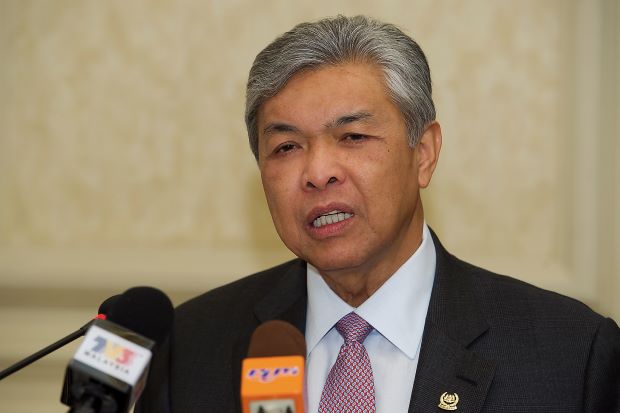
Deputy Prime Minister Datuk Seri Dr Ahmad Zahid Hamidi announced Putrajaya has ended the moratorium and will now allow foreign workers into the mining and services sectors, while providing “more leeway” for those in the agriculture sector.

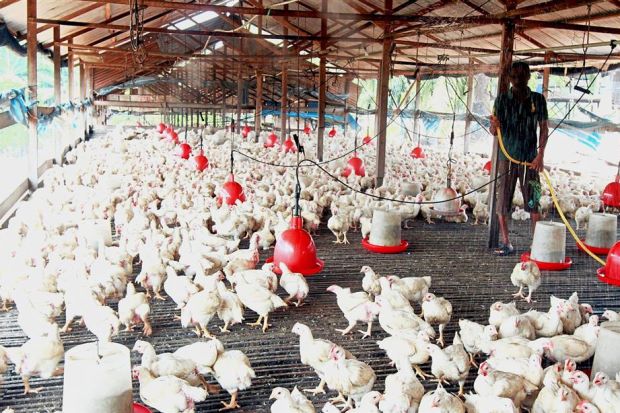
“The Cabinet Committee had also considered few proposals, and has agreed with the Agriculture and Agro-based Ministry to provide more leeway for foreign workers intake for the agricultural sub-sector of chicken farming (chicken/ egg and others), under the foreign workers intake for critical sectors,” Zahid said in an official statement.

“The Cabinet Committee also agreed with the proposal by the Natural Resources and Environment Ministry to allow foreign workers intake for the mining and quarrying sectors,” he added, saying the approval for this sector however will only be given on an interim basis until 2020.

Ahmad Zahid said the permission was given due to the critical need for manpower in said sectors which were unable to draw interest from the local workforce, with these sectors often based in rural areas and classified as a “3D job”: dirty, difficult, and dangerous.

He said that the committee also agreed with the Transport Ministry’s proposal to have foreign workers fill the void of manpower in the services sector, such as cargo operations at ports.

“The permission for this is limited only for cargo operators at ports. The ports in the country are currently facing manpower issues because such jobs are also considered as 3D, failing to attract locals. The permission is given to ensure our ports remain competitive and are able to compete with other ports in the region,” he added.

Ahmad Zahid announced that the interim hiring period for foreign workers in the tourism sector, will also be extended until 2020. Tourism-linked business operators were previously allowed to hire foreigners on an interim basis from 2012 to 2016 only.

“The permission for this sector covers spa and leg massage businesses, hotel, hospitality sub-sector (back of house), resorts and golf caddies (males only),” he said, adding that the extension was allowed to spur tourism and provide a grace period for business owners who are “not yet ready” to replace their foreign employees with local workers.

In May last year, the Cabinet Committe agreed to allow certain sectors to continue hiring foreign workers, after announcing the blanket freeze in February the same year.

The sectors were manufacturing, construction, agriculture, and its sub-sectors such as vegetable, fruit and flower planting.

Putrajaya had in February last year announced its suspension of the recruitment of all foreign workers including 1.5 million Bangladeshis, offered by Dhaka.

Zahid, who is also home minister, added that the moratorium will remain in effect until Putrajaya is convinced about the actual manpower requirements in the various sectors locally.

He further said the government will shift its focus to retraining the local workforce to meet existing demands.


Govt to issue temporary passes for illegal foreign workers

PUTRAJAYA: Employers with existing illegal foreign workers can continue to hire them as the Government has agreed to issue temporary work passes for these workers.

The move ensures that operations and production are not be disrupted and will allow authorities to monitor foreigners who are in the country.

Announcing this, Deputy Prime Minister Datuk Seri Dr Ahmad Zahid Hamidi (pic) said the passes would be issued by the Immigration Department and employers must also pay a levy as per the normal procedure for hiring foreigners.

“They can start applying for the temporary card for their illegal workers once the Attorney-General’s Chambers has sorted the legal process,” he said after chairing the Cabinet Committee meeting on foreign workers and illegal immigrants on Tuesday.

The committee also agreed to allow four sectors to employ foreign workers in order to ease the worker shortage.

The sectors are poultry farming, mining and quarrying, cargo handing and hospitality and tourism.

“We are aware of the shortages faced by these sectors and that is why we will allow employers to take in workers so that their operations will not be disrupted,” said Dr Ahmad Zahid.

However, approval for the mining and quarrying and hospitality and tourism sectors will only be given until 2020.

Poultry industry happy with permit decision

PETALING JAYA: Poultry farmers have received an early Chinese New Year gift as the foreign worker ban on their sector has been lifted.

This means that consumers can hope to see a reduction in the prices of chickens in the future.

But, Federation of Livestock Farmers Associations Malaysia president Datuk Jeffrey Ng said it may take some time for the workers to arrive.

“This is a big help for me as it solves the main issue of labour shortage. This is a big ang pow for us,” he said yesterday.

“Small farms that have closed due to lack of foreign workers can be reopened when the workers come in. For me personally, my seven farms can return to full capacity.”

Ng said he has had to rest one of his farms and transfer workers from there to the other six to keep them operating at an optimal level.

He added that they would start preparing the documents to submit to the Home Ministry, but pointed out it would take at least three to four months before the foreign workers arrive.

When the workers arrive, it should take a few weeks for broiler farms to return to full operation while for breeder farms (chicks) and layer farms (eggs) it would take a few months.

“But until new workers come, I will have to rest one of my farms, so hopefully the process can be done quickly,” said Ng.

Yesterday, Deputy Prime Minister Datuk Seri Dr Ahmad Zahid Hamidi, who is Home Minister, announced that the Cabinet committee on foreign workers and illegal immigrants had agreed to allow the poultry farming sector to employ foreign workers in order to ease the worker shortage.

The Star reported last week that poultry farms in the country are suffering a shortage of 5,000 workers which has added to a loss in production and supply.

This, in turn, had increased the prices of broiler chickens.

Ng said by replenishing the workforce, this would allow farms nationwide to function at full capacity and see more consistency in the supply of chickens.

“I hope the market price for chickens will be more reasonable and it should be able to stabilise.”

Ng mentioned that hiring foreign workers would be more expensive as the industry members had to compete with other countries like Thailand which were also hiring workers, while the currency exchange would increase costs.

“At least for now, it’s not so bad as the ban has been lifted and the main problem can be solved,” he added.

Cameron Highlands Vegetable Growers Association secretary-general Chay Ee Mong said they would wait for more details on the fee for rehiring illegal foreign workers.

Chay said last year’s 6P Programme for legalising foreign workers was costly as the total fee was more than RM5,000 for one foreign worker.

“If the range is between RM2,000 and RM3,000, then the overall cost is not too burdensome,” he said.

“So we will wait and see what is the latest details before we decide.”